

Signs That Tell You: You Are Ready For a Hair Transplant? (2026)
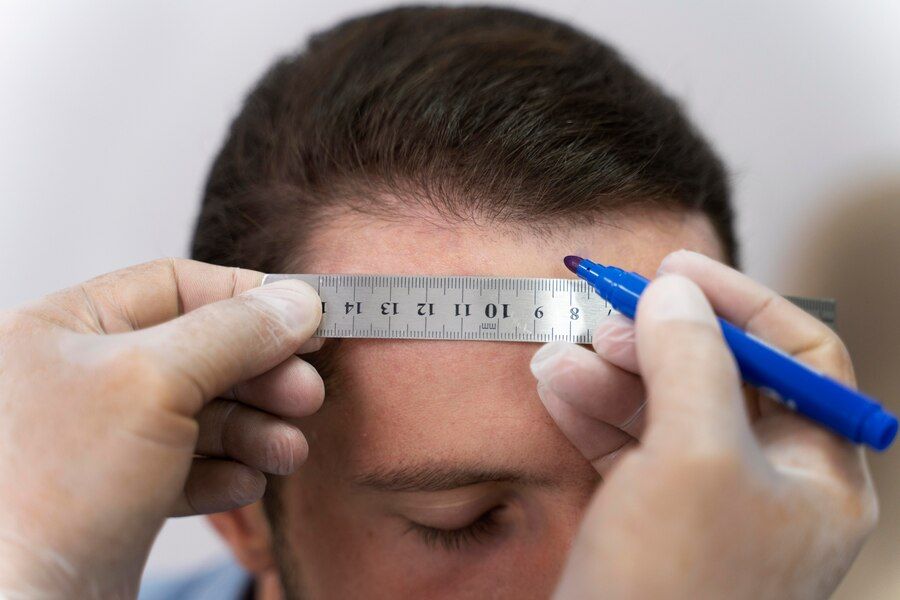
Signs That Tell You: You Are Ready For a Hair Transplant? (2026)
Hair loss can feel like a slow theft of your youth. You might find yourself checking the mirror every morning, adjusting your styling to hide a receding hairline or a thinning crown. In my clinics in Islamabad and Peshawar, a hair transplant is one of our most requested procedures—but the most critical step isn't the surgery itself; it’s the timing.
As a Consultant Plastic Surgeon, I look at a hair transplant as an investment in a finite resource: your donor zone. Undergoing surgery too early or with the wrong expectations can lead to patchy results down the road. Here is the 3Ws and 1H guide to knowing exactly when you are anatomically and mentally ready for hair restoration at Dr. Salman Aesthetics.
Why Timing and "Stabilization" Matter Most
The most common mistake patients in Pakistan make is rushing into a transplant at the very first sign of hair loss.
-
The Progressive Enemy: Male pattern baldness is progressive. If you transplant hair to a receding hairline while your native hair is still rapidly falling out, you will eventually leave behind an "island" of transplanted hair with a gap behind it.
-
The Donor Bank: The hair on the back and sides of your head (the donor area) is limited. We must use these follicles strategically to provide lifetime coverage.
4 Definitive Signs You Are Ready for Hair Restoration
-
Your Hair Loss Has Stabilized (Age 25+) By the time you reach 25, your genetic hair loss pattern becomes predictable. If your hairline hasn't drastically changed in the past 12 to 18 months, your scalp is structurally ready for a permanent design.
-
You Have a Strong Donor Zone A successful transplant requires high-density, healthy hair follicles at the back of your head. As a surgeon, I evaluate the caliber and root strength of these follicles to ensure they can survive the relocation to your thinning zones.
-
Medical Therapies Have Laid the Foundation The best candidates are already protecting their native hair. If you have been using medical stabilization—such as minoxidil, finasteride, or PRP (Platelet-Rich Plasma) Therapy—to stop active shedding, you have created the ideal canvas for surgery.
-
Your Goals are Balanced by Reality A transplant restores density and recreates a youthful, frame-appropriate hairline—it does not recreate the exact follicle count you had at age 16. Being ready means appreciating the difference between an artful restoration and an anatomical impossibility.
FUE vs. FUT: Selecting Your Surgical Technique
At our Cosmetic Expert Clinic, we utilize the latest international protocols to harvest and place every graft with absolute precision.
-
Follicular Unit Extraction (FUE): This is our premier, minimally invasive technique. We harvest individual hair follicles one by one using micro-punches. There are no linear stitches, no visible scars, and you can wear your hair short with complete confidence.
-
Follicular Unit Transplantation (FUT): Often reserved for maximum coverage cases. It involves a microscopic dissection of a small tissue strip, yielding a massive number of viable grafts in a single session.
How "Strategic Sizing" Restored a Young Professional's Edge
I recently treated a 29-year-old corporate manager in Islamabad who felt his premature hairline recession was holding him back in professional circles. His hair loss had been stable for two years thanks to a consistent medical routine.
We performed a High-Density FUE Transplant, carefully angling 2,500 grafts to match his natural growth direction. Because his native hair was stabilized, the new hairline blended seamlessly. Six months later, he shared, "I no longer think about my hair before a meeting or a presentation. The density looks completely natural, and it has completely changed how I carry myself." This is the "Doctor Salman Result"—surgical precision that blends effortlessly with nature.
Hair Transplant Cost in Pakistan (2026)
The investment in a hair transplant at our Islamabad and Peshawar locations is directly tied to your anatomical needs. It is calculated based on:
-
The Graft Count: A minor hairline touch-up requires a different protocol than a full-scalp crown restoration.
-
The Technique Chosen: Advanced FUE requires immense manual precision and specialized micro-tools.
-
The Surgeon's Artistry: Designing a hairline that looks natural as you age requires the trained eye of a specialist plastic surgeon.
Safety and Surgical Precision: The Dr. Salman Difference
A hair transplant is a surgical procedure that requires absolute sterility and an intimate knowledge of scalp vascularity. Whether you visit us at the Beverly Centre (Islamabad) or University Road (Peshawar), your hair restoration is performed with the highest medical standards. We don't just "plug in hair"; we design a natural growth gradient, ensuring correct angles, depth, and density for a lifetime of natural growth.
Final Thoughts: Step Into Lasting Density
If your hair loss has stabilized and you are ready to trade temporary cover-ups for permanent growth, you are likely ready for a hair transplant. Stop worrying about active shedding and start investing in a permanent profile refresh.
Ready to Restore Your Hairline and Confidence?
Book your professional scalp evaluation at Dr. Salman Aesthetics / Cosmetic Expert Clinic today.